
Month: February 2025

5 Essential Lighting Fixtures for Dog Owners: Create a Safe and Cozy Home

A dog owner sits in a cozy living room at night, adjusting a dimmable LED lamp while a golden retriever lounges on a pet bed nearby, illuminated by a warm, soft glow.

While pet owners wish to create a safe and inviting place for both themselves and their pets to live, having the right lighting is critical.

The appropriate lighting is incredibly important, as it improves the pet’s wellness while ensuring the style and functionality of the house are maintained.

If you need soothing lights for an anxious pup or tough fixtures that handle playful tails, making the appropriate choice and selecting the best sites that offer “browse our lighting products” on their site is important.

If your pet happens to enjoy chewing on light fixtures and you want to make a style upgrade to your house, make sure to look at our lighting products for pets that ensure style, safety, and practicality.

1. Motion-Activated Lights for Safety

Most dogs will not wait for their owners to switch the lights on and will start sprinting throughout the home. If you have any elderly pets with declining vision, motion-activated lights are a great solution, as they instantly light up at the first sense of movement.

Incorporating these in your automation system makes them even more convenient. Consider adding these smart lights to places like hallways, outdoor areas, and even staircases.

2. Dimmable LED Ceiling Lights for Comfort

Harsh lighting during the day and evening can be disturbing to furry friends, especially when they are relaxing. Dimmable LED ceiling lights let you fine-tune illumination levels to help with your dog’s comfort.

Soft, warm lights simulating natural hues let your pets ease into relaxation before bedtime. Moreover, LED lights have low heat output and a long operational life, which makes them economical and pet-friendly.

3. Nightlights for Late-Night Navigation

Just like humans, dogs can get lost in the dark. If there is any movement from your pup during the night, nightlights can help.

Plug-in LED nightlights are inexpensive, energy efficient, and have a friendly glow that ensures there will be no accidents with furniture or walls.

These night lights are very effective in bedrooms, hallways, and next to food and water bowls. In addition, nightlights that utilize sensors that switch them on at dusk and off at dawn.


ALSO READ: Why Every Dog Owner in Melbourne Should Know About Nang Delivery Services


4. Floor and Table Lamps That Are Safe For Pets

If an excited dog knocks over a traditional table that has a lamp, the dog can seriously hurt himself. Look for sturdy lamps that have weighted bases that do not tip over easily.

In addition, select lamps that have shatterproof shades or covered bulbs instead of exposed lamps. Also, have rechargeable or cordless lamps that are safe for pets that like to chew electrical cords.

5. Outdoor Solar Pathway Lights That Are Great For Night Walks

If your dog loves taking strolls in the backyard during the evening, then these outdoor solar pathway lights are great because they are so economical.

These lights charge environmentally friendly during the day and automatically turn on at night so your dog does not trip or stumble around.

These lights improve the beauty of your home while your pet can walk around without the need to exercise caution and safely enjoy the outside in the dark.

Conclusion

The correct choice of lighting for your home can significantly change the experience for both you and your dog.

From motion-activated lights designed for additional security to lamps designed with the pet in mind to minimize hazards, these five must-have solutions light homes that do not sacrifice on functional comforts.

Improving a dog’s safety and well-being by selecting friendly lighting while at the same time having an effortlessly lighted house is achievable.
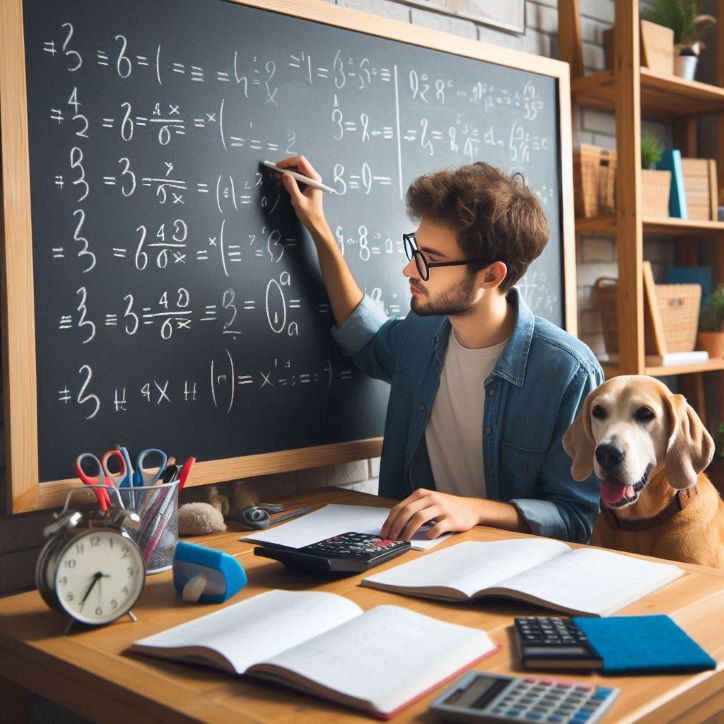
How Training Your Dog is Like Learning Math: The Power of Consistency

math and pet training

Training your dog and learning math require patience, consistency, and a structured approach. Just like math tutoring, dog training isn’t something that can be rushed or skipped. It’s about reinforcing good habits over time. With dedication and repetition, both your furry friend and you can experience the success of mastering something new. If you’ve ever struggled with math, you’ll find it’s not unlike the challenges faced when teaching a dog a new trick or command.

Consider how math tutoring works. A student isn’t expected to understand a complex concept after one lesson. Instead, regular practice and repetition are key to mastering a skill. Similarly, dog training involves consistent, repeated efforts to reinforce positive behavior. For example, like a child learning to solve problems, a dog learns commands through small, repetitive steps. Whether it’s teaching them to sit, stay, or fetch, consistent reinforcement helps your dog understand what’s expected. Just as Charlotte math tutoring helps students grasp concepts over time, training helps dogs build their understanding of commands.

Patience and Repetition

Just as a math student doesn’t become proficient overnight, your dog won’t master commands in one session. Both require repeated efforts and patience. Imagine trying to teach a child to add numbers. They don’t get it right away, but they start to understand after consistent practice. Similarly, when you teach your dog, it’s the same process. Consistency is crucial when you’re training your dog to stop barking or to fetch a specific item. They won’t learn as effectively if you constantly change your expectations or allow your dog to slip into old habits. The key is repetition and consistency.

The Role of Rewards

Just as positive reinforcement helps a student succeed in math, it also motivates your dog. Positive reinforcement can take many forms: praise, treats, or extra playtime. This is akin to rewarding a student with praise for solving a tricky problem or achieving a goal. When a dog successfully follows a command, the reward reinforces the behavior, making it more likely they will repeat the action. In math, each small success builds on the last. The same goes for dog training – each success makes your dog more likely to obey the next time.

The Importance of Structure

Structure is an essential part of both learning math and dog training. When you follow a structured approach to teaching math, you break down the subject into manageable parts. For example, learning algebra begins with basic addition and subtraction before moving to more complex problems. Similarly, dog training starts with simple commands like ‘sit’ or ‘stay’ before moving on to more complex behaviors. A structured approach keeps you and your dog on track and ensures that you build a solid foundation for future learning. Just as skipping steps in math can lead to confusion later on, neglecting the basics in dog training can make it harder to progress.

Building Trust and Understanding

Another striking similarity between learning math and dog training is the trust built over time. When a student learns a new concept, they develop trust in their tutor, believing that they will eventually understand the material. Similarly, when you train your dog, you are building trust. Your dog learns to trust that you will provide consistent expectations and rewards. Over time, this trust helps them feel more secure and eager to learn. Just as trust between a student and a tutor fosters a positive learning environment, trust between you and your dog creates a productive, loving training atmosphere.

READ ALSO: 5 Practical Apps for Dog Owners

Consistency is Key

Consistency is the common thread that ties dog training and math learning together. Without consistency, it’s easy to lose progress and get frustrated. A math student who skips practice will struggle to understand new concepts, just as a dog who isn’t trained consistently will fail to learn new behaviors. Whether you’re working on complex equations or teaching your dog a new trick, repetition, and consistency are the secret ingredients to success.

So, whether you’re sitting down to solve math problems or spending time with your dog, remember that both require patience, structured learning, and a steady commitment to progress. The more consistent you are, the more likely your efforts will lead to success, whether taking a math test or teaching your dog a new command.

In the end, dog training, like math, is about mastering the basics, reinforcing good behavior, and consistently practicing. The power of consistency makes learning possible – for both dogs and humans alike.

Loading, please wait…
𐌢